Why Your Suit Wrinkles (And Others Don't)
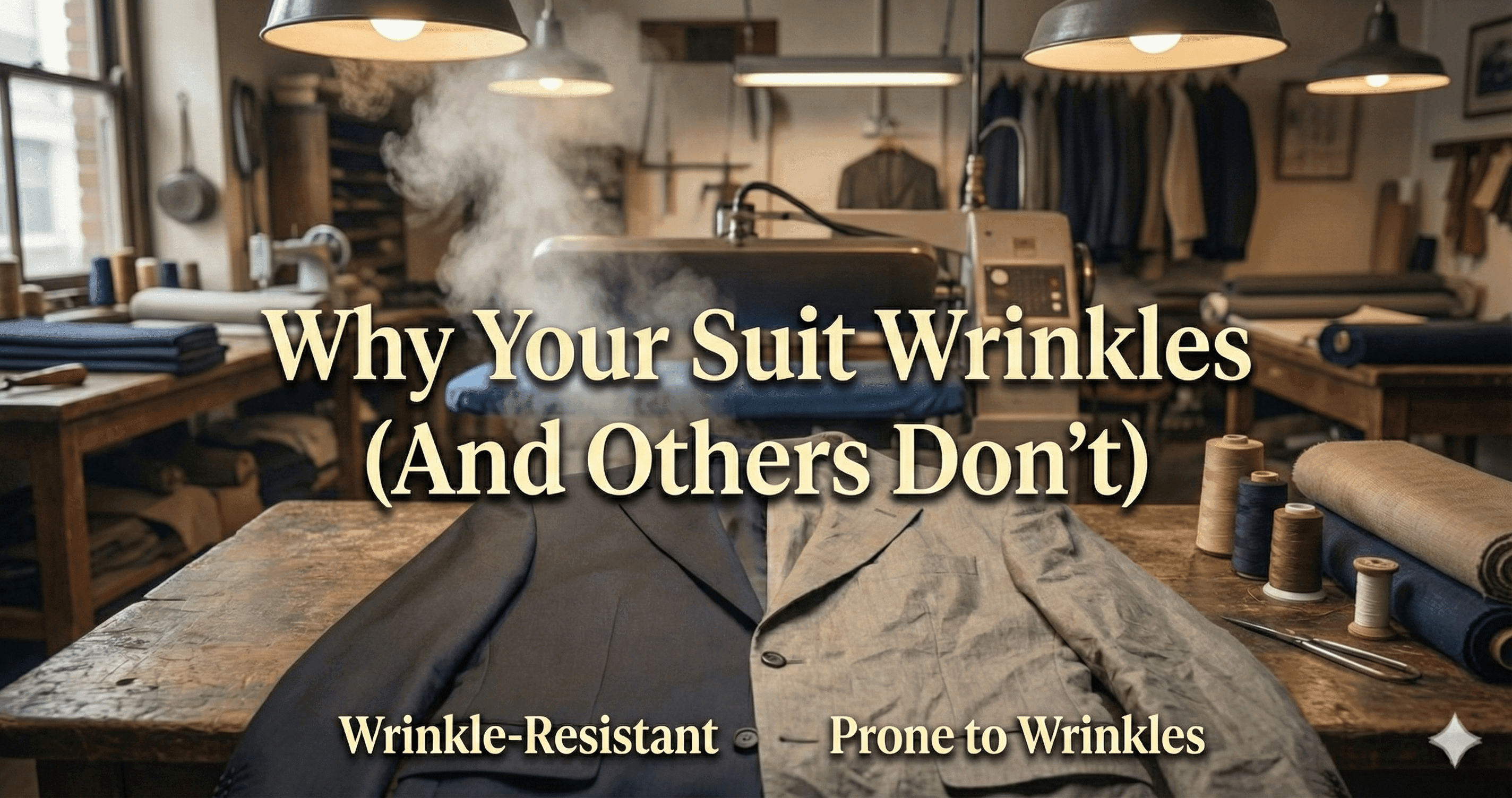
You hang two suits next to each other. Same price, same brand. One looks fresh after a full day. The other looks like you slept in it.
The difference isn't magic. Its construction.
Most wrinkles come down to how the wool fibres are twisted together. Tightly twisted yarns—called high-twist wools—bounce back from creasing. They're naturally springy. Think of them as having built-in memory foam.
Loosely twisted yarns feel softer to the touch, but they hold creases more easily. That's why some luxury fabrics wrinkle more than mid-range ones. The mill prioritised hand-feel over wrinkle-free performance.
Weave matters too. Plain weaves (the most common) show every fold. Twill weaves—where the threads cross diagonally—camouflage wrinkles better.
Then there's fibre length. Longer wool fibres create smoother, more resilient fabric. Shorter fibres pill and wrinkle more easily. It's like comparing a silk sheet to cotton—the silk just flows better.
Weight plays a role, but not how you'd expect. Super-light fabrics (under 210g) wrinkle easily because they lack sufficient structure. But go too heavy (over 320g in Dubai's heat), and you're asking for permanent creases from sweat and movement.
The sweet spot? 230-280g fabrics with high-twist yarns. They're substantial enough to hold their shape but light enough to breathe.
One more thing—some wrinkles are your fault. Overstuffing trouser pockets, sitting on your jacket, wearing the same suit three days running. Even the best fabric has limits.
There are also some performance fabrics to consider if creasing is your number one enemy. These are designed to be super resilient and can be a great option if you travel frequently.
The most expensive cloth in the world won't help you if you treat it like workwear. But get the right fabric and treat it right? You'll look sharp from morning coffee to evening drinks.